More Detail
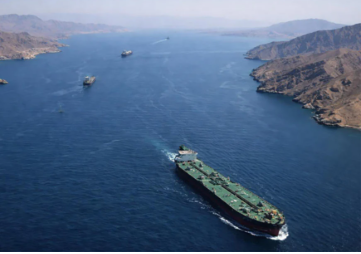
The Strait of Hormuz is a narrow but enormously consequential maritime chokepoint situated between Iran to the north and Oman's Musandam Peninsula to the south. Spanning merely 33 km at its narrowest, with usable shipping lanes of only 3 km in each direction, it connects the Persian Gulf to the Gulf of Oman and the Arabian Sea. Despite its modest geography, it functions as the jugular vein of global energy supply, making it one of the most strategically watched waterways on Earth.
Strategic & Economic Significance
Approximately 20 million barrels of crude oil transit the strait daily, representing nearly 20% of global oil consumption. Nearly one-fifth of global LNG trade also passes through it, with Qatar being a dominant exporter. Around 80% of this oil flows toward Asian economies — China, Japan, South Korea, and India — making any disruption a shared catastrophe for the Indo-Pacific region. The strait is heavily militarised, with Iran's Revolutionary Guard forces, US naval assets, and strategically located islands like Hormuz, Qeshm, and Abu Musa reinforcing its geopolitical sensitivity.
2026 Crisis
The strait recently witnessed a severe escalation following joint US-Israel military strikes on Iran. Iran retaliated by threatening commercial shipping, launching missile and drone attacks, and warning tankers against passage. Tanker traffic dropped by nearly 90%, with over 150 vessels stranded outside. Oil prices surged and war-risk insurance costs spiked, demonstrating how quickly a regional conflict can transmit into a global economic shock.
Impact on India
India imports around 85% of its crude oil, much of it from Gulf nations like Saudi Arabia, Iraq, Kuwait, and the UAE — virtually all routed through the strait. Any disruption directly inflates India's import bill, worsens the current account deficit, weakens the rupee, and fuels domestic inflation. LNG imports from Qatar and LPG from Gulf states are equally vulnerable. Beyond economics, India must also weigh its strategic maritime interests in West Asia, potentially requiring enhanced naval diplomacy and engagement.