More Detail
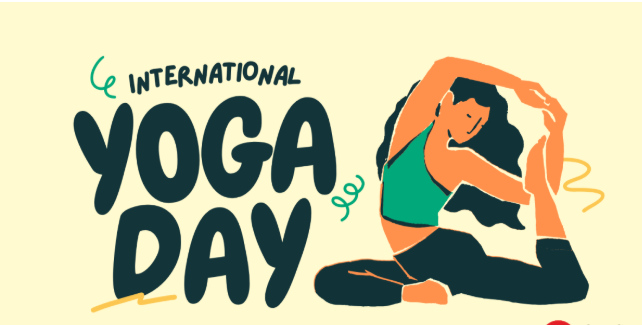
The International Day of Yoga (IDY), observed every year on June 21 — the Summer Solstice — was declared by the UN General Assembly in 2014 following an India-led resolution. The 2026 edition carries the theme "Yoga for Healthy Ageing," aligning with the WHO Decade of Healthy Ageing (2021–2030). Through the Yoga Sangam Initiative, organisations across India hold synchronised sessions under the Common Yoga Protocol (CYP), turning IDY into a collective national movement rather than a single-venue event.
What is Yoga?
Derived from the Sanskrit root Yuj (to unite), Yoga is one of India's six orthodox philosophical schools. Its core aim is self-realisation — the union of individual consciousness with Universal Consciousness — leading to Moksha (liberation) or Kaivalya (freedom). In yogic tradition, Lord Shiva is revered as the first yogi (Adiyogi), who transmitted this knowledge to the Saptarishis. The sage Patanjali later systematised it through the Yoga Sutras, introducing the Eight Limbs (Ashtanga Yoga) that integrate ethics, postures, breath control, and meditation.
Chronological Evolution
Yoga's roots trace back to the Indus Valley Civilisation (c. 2700 BCE), evidenced by the Pashupati Seal. It evolved through the Vedic period (Surya Namaskara, Pranayama), the Classical period (Bhagavad Gita, Patanjali's Sutras), the Post-Classical period (Hatha Yoga Pradipika, 15th century), and into the Modern period, where figures like Swami Vivekananda and Tirumalai Krishnamacharya — the "father of modern yoga" — took it global. Today, science validates its benefits on neuroplasticity, cardiovascular health, and stress reduction.
India's Yoga Diplomacy — The Strategic Dimension
India uses Yoga as a multi-layered strategic instrument. First, it counters China's push for Traditional Chinese Medicine (TCM) by anchoring the WHO Global Centre for Traditional Medicine in Jamnagar and positioning Ayurveda-Yoga as scientifically validated alternatives. Second, Yoga enables strategic de-hyphenation — shifting the global perception of India away from a "South Asian conflict actor" to a Vishwabandhu (friend of the world) offering civilisational wisdom. Third, Yoga has penetrated conservative geographies like Saudi Arabia, which formally recognised it as a sport, building people-to-people capital in an energy-critical region.
Economically, the Ministry of Home Affairs has introduced dedicated E-Tourist Visas for wellness programs, while the Ministry of AYUSH executes the "Heal in India" blueprint under Medical Value Travel (MVT). Regional hubs like Rishikesh, Kashi, and Kerala are being developed as global spiritual capitals to generate foreign exchange — a "New Yoga Economy." To preserve authenticity, India deploys certified instructors through its Missions abroad and promotes Yoga through the Namaste Yoga app.